Thursday, February 28, 2013

The Published Author Transformation


By Rupali Rotti


Writing, and getting your work published, is an experience where a writer goes through metamorphosis. There are many things he/she learns during this whole process. Following are the things that I learned:

[1] A good logic and 360 degree thought process can help you form a general plot or a story, but you still need to research, be you a fiction writer or otherwise.

[2] Write attacks usually happen when you’ve just hit the bed at night, or early morning before you even brush your teeth!

[3] You burn a lot of calories thinking your way to glory. Yippee!! But after you are done, you are famished!

[4] When you are done writing your book, you feel very happy and satisfied. But if you don’t belong to the writing world, you will learn that this is only the “Initial Draft”! The actual hard work starts after this.

[5] Being new to the writing/publishing world, you wouldn’t understand the importance of ‘editing’ unless you get an editor to work with you – preferably a paid one. A good editor creates magic like you’ve never seen before, because he/she has created that magic for your baby – your pet project.

[6] Many of your friends or family may offer to help you with editing, even without any experience as an editor. Hence, they may or may not be good at the job.
 [7] I personally had never looked at the names of the editors of any movies/TV shows I had watched, or any books I had read. But now, I know that an editor can make or break your work. I learned this after having a good editor work on my book, and then a bad one. Surprisingly, the one who appreciated my work turned out to be the bad one. The editor who tore my work apart with many corrections and feedbacks turned out to be the good one.

 [8] I have learned that editing contains the following things: (i) Spelling and grammar corrections (ii) Thought flow checking (iii) Logical paragraph making (iv) Plot review (v) Character strength formation/checking (vi) Dialogue strength checking, and a few other things, which I’m still learning.

[9] All people in this industry are very polite (unlike the job world where you are never good enough, or the business world, which is a dog-eat-dog world).

[10] There are various ways of getting your book published: (i) Self-publishing a paperback (ii) Self-publishing an ebook (iii) Publishing through a Vanity Publisher (iv) You’ll be lucky if your work gets selected by a Commercial/Trade Publisher. Check this link out

[11] Once your book is selected for publishing, it is never a good idea to tell your friends and family that you are going to be a published author soon. Tell them only when the printing is done and over with. This is because the total time from your book getting selected for publishing to the book coming on bookstands is a very long period. You may lose most of your customers during this waiting period.

[12] When you are finally a published author, good wishes and congratulations are showered on you by your near and dear ones. But there is an equal risk of ALL of them asking for a complimentary copy to read, or to stock.

[13] It is a good idea to have your autograph different than your signature in the banks. :-p

[14] You get addicted to ‘checking stats’ on each and every site. However, avoiding this addiction and concentrating on your next project helps better.

[15] You feel like packing a bunch of your books in your back-pack and pitching it to every person you meet, so you could sell more copies. And, you feel like making this trip every day! ;-)


[16] Just like there’s a beta-testing for all software before launch, you can have beta-readers for your work before sending it to publication. But be wary, because once in a while, a crackpot beta reader may steal your work! Don’t worry there are ways to safeguard your work as well. One of them is to seek online copyrights, and another way is to have multiple beta-readers working on the same piece of work, so you have a lot of ‘witnesses’ to prove it was ‘your’ work. But most of the beta-readers are very helpful and knowledgeable. You could find beta-readers on www.goodreads.com or www.fictionpress.com

[17] It always helps to connect to other authors and share tips/tricks/experiences. Check out: www.writersdigest.com 

[18] Nobody is interested in getting spammed by your messages to buy your book. This means that direct promotion never works. You have to think of other ways to present your book to the reading mass.

[19] Marketing is better left to the pros. But if you can’t afford spending on professional marketing efforts, then refer to point 16 above. Check this link out

[20] Maintaining a blog and creating a Facebook page are easy ways to gain followers. Check out my blog and Facebook page that I have created. For ‘your’ Facebook page, take marketing advice here. 

[21] Even if you feel like getting into marketing/publicity of your book, don’t let it affect your writing, because that’s your main product. Keep on learning, and keep on improving your craft of writing.

[22] And finally, what my characters, the NAYAK BROTHERS, learn the hard way, and an advice that applies to all of us: “It is easier to break your will when you don’t have a purpose to go on.” Also don’t forget that “a kick in the a** is also a step forward.


About Rupali Rotti:
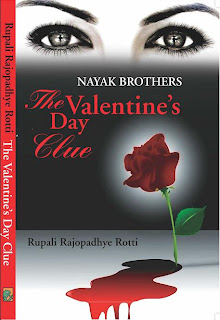
After working in the corporate world and running business, Rupali finally ventured into writing. Her first book, "The Valentine's Day Clue", has just been published under the series title: "Nayak Brothers". This is a detective adventure series that revolves around two aspiring detectives living out of Pune, India. Like any other teenager, they have dreamy eyes, fire in their bellies, friends they care about, and an urge to make a difference. And yet, they struggle with their daily routine, studies (!), self-doubt, coming-into-age woes, and inexperience. But along the way, a mystery and an adventure of a lifetime is in the offing...

Visit Rupali at her website or on Facebook.


Thursday, February 21, 2013

One Year, Two Novels, and Five Rules for the Road


by Chuck Greaves


For me, the year 2012 proved a wild ride indeed, in which HUSH MONEY, my debut legal thriller, was published by Minotaur in May, followed by HARD TWISTED, a literary/historical/true-crime novelization, published by Bloomsbury in November – all while writing and editing GREEN-EYED LADY, forthcoming from Minotaur in June of 2013.   

The result was a crash course in Publishing 101 from which, employing a metaphorical Jaws of Life, I’ve prized five useful insights for those approaching or just entering the authorial highway:

1. Watch Your Speed.  Having come from a legal background, in which clients expected results yesterday, I was shocked by the slow pace of traditional publishing.  Months from deal memo to final contract?  Over a year from acquisition to publication?  Book Street is more construction zone than Autobahn, and everything takes twice as long as you think it should, so settle back and adjust your expectations accordingly.

2. Bring Toll Money.  No, they won’t be sending someone over to shoot your jacket photo, and yes, that car waiting to take you to your next book signing looks suspiciously like your own.  In other words, plan on spending some of your advance money on self-promotion – from a web site to a book tour to a few writers’ conferences – both because it’s a good investment in your future and because, in all likelihood, your publisher will expect it.
3. Anticipate Traffic.  There’s a stretch of busy roadway that begins about six weeks before your publication date, and that ends (depending on sales) around three months after, during which you’ll be driving the pace car and leading your publisher’s pack.  You’ll be reviewed, you’ll blog, you’ll do signings and media, and your in-box will fairly bulge with urgent messages from your agent, editor, and publicist.  Prepare for this time, and make the most of it while it lasts, because it won’t last forever – and thankfully so, because you have your next book to write. 

4. Keep Your Eyes on the Road.  You had the luxury of writing your first novel without (publishing-related) interruptions and demands, but not so the second.  While self-promotion becomes especially important after those phone calls from the publicist have ceased, remember our friend Narcissus.  Every minute you’re posting on Facebook or self-Googling is a minute you could, and should, be writing your next novel.  Aim to strike a healthy balance.

5. Carpool.  One of the great pleasures of publication is that you’re joining a virtual community of smart, talented, and creative individuals, all of whom are, at different speeds, traveling in your same direction.  Embrace them!  Go to conferences, and meet your writing contemporaries.  Attend signings at your local bookstore.  Blurb books when given the opportunity – and the honor.  Writing is not a zero-sum game, and all of us benefit when each of us succeeds with the book-buying public.  Enjoy the ride!


About Chuck:

Chuck Greaves won the SouthWest Writers’ Storyteller Award for his debut novel HUSH MONEY, which has been named a finalist for the New Mexico/Arizona Book Award, the Rocky Award from Left Coast Crime, and the Reviewers’ Choice Award from RT Book Reviews.  You can visit him on-line at www.chuckgreaves.com.  He’d love to hear from you.


About HARD TWISTED:

Hailed as a "gritty, gripping read" (Los Angeles Times) and a "taut and intriguing thriller" (The Sunday Times), HARD TWISTED, the noirish sophomore novel from author C. Joseph Greaves, tells the true story of 13-year-old Lucile Garrett's harrowing year on the road with her father's murderer, in which the unlikely duo traverse the Depression-era Southwest leaving a trail of bodies in their wake. 

Thursday, February 14, 2013

Happy Valentine's Day: The Love of The Thrill


By Liese Sherwood-Fabre


In 1974, two psychologists conducted an experiment where after men crossed a bridge, an attractive female approached them to participate in a short study. In half the cases, the men crossed a swinging suspension bridge, which Dalton and Aron hypothesized would increase both the men’s heart rate and breathing. In the other half, they crossed a much more stable bridge.

Both groups were then asked to write a brief story about a picture the female scientist showed them. After completing the assignment, she gave her phone number to each “in case they had further questions.” More of the men who crossed the suspension bridge called the woman afterwards than those on the sturdy bridge. The psychologists concluded the men attributed the crossing’s heightened arousal to the woman rather than the bridge. In other words, the bigger the thrill, the greater the love.

Writers, especially thriller writers, have inherently known this and use it as a common plot element. The perilous situation found in suspense fiction heightens characters’ tension, and they quickly bond with each other. Think of the attraction developed between the hero and heroine in such storylines as Speed, Romancing the Stone, The Bourne Identity, and just about every James Bond film. When the bullets fly, so do characters’ hormones.

But the same can be said about relationship between the reader and the thriller writer. Any writer, regardless of genre, seeks to create an emotional bond with the reader. In turn, the reader desires stories that evoke emotions—be it love, fear, terror, etc. No greater compliment exists for a writer than, “I couldn’t put it down.” In this instance, the reader has become so attracted to the characters, he must finish the book to find out how—or if—the hero and heroine survive. The up-and-down emotional rollercoaster keeps the reader connected to the characters and their plight.

For my debut novel Saving Hope, Alexandra, the main character, must battle Russia’s crumbling healthcare system to save her daughter’s life. Along the way, she encounters a local mafia boss, Iranians seeking bioweapons, and one very annoying FSB (formerly the KGB) officer who’s not convinced she’s not involved in something illegal. In turn, she must decide whether to trust someone from an organization everyone feared during the Soviet era. Making certain readers stay involved in the story means ensuring they care what happens to Alexandra and her daughter as well as that FSB agent.

The word thrill is defined as sudden excitement or pleasure, and for thriller readers, they can expect both in every story.

What about you, has a book recently brought you an exceptional thrill to the point you couldn’t put it down? Is there a particular story you think illustrates the relationship between tension and emotion?


Bio:


LieseSherwood-Fabre grew up in Dallas, Texas and knew she was destined to write when she got an A+ in the second grade for her story about Dick, Jane, and Sally’s ruined picnic. After obtaining her PhD from Indiana University, she joined the federal government and had the opportunity to work and live internationally for more than fifteen years. After returning to the states, she seriously pursued her writing career, and her debut novel Saving Hope is available through Musa Publishing and wherever eBooks are sold. She is also currently offering two copies of her novel through ITW’s Never-endingBook Giveaway.


Thursday, February 7, 2013

First Thursday

Hi there.

Were you expecting to see the new releases for this month?

That's what we normally do here on The Thrill Begins. First Thursday means releases from the current debut class. In one of those wrinkles of publishing time - you all know about those time distortions, right? - we don't have any debuts this month.

So this seemed like a great time to remind you about some of the advantages of being in the Debut Author program.

First, of course, is your brand new baby - that book you sweated blood over - could be showcased here on the blog.

In addition, your book news will be a part of our Big Thrill email blast which is sent to over 14,000 thriller fans around the world including readers, booksellers and librarians. Interviews in The Big Thrill; mentor events; special debut author events online and at Thriller Fest - the list goes on. Check out the details on the ITW website.

Ready to join? Have friends releasing their debut novel? Contact Anthony Franze about membership.