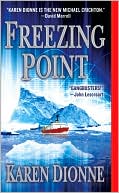
Showing posts with label Karen Dionne. Show all posts

Thursday, January 20, 2011

Making an Audiobook

Some argue there’s no such thing as an audio­book. After all, a book is something you hold in your hands. Okay, maybe a book is also a file you download onto your preferred electronic reading device, but no matter the form, a book is still something you read. It has physical characteristics: a type font, chapter headings, pages. When a book is read to you, you’re not actually reading, someone else is. Ergo, an “audiobook” is not really a book, it’s a recorded listening experience.

I used to think that audiobooks weren’t for me. I’ve always considered myself a visual person. Tell me your name when we’re introduced in a social setting, and it’s gone five seconds after I hear it. Write it down where I can see it, and I’m the elephant who never forgets.

But after my science thriller Freezing Point sold to Audible.com as part of their “Breakout Thrillers” program, suddenly, I had reason to pay attention. I listened to samples of my narrator’s reading on Audible’s website, and fell in love. His voice quality, and his wry, sardonic tone, were perfect for my novel.

Before he began recording, Mark Boyett called me to go over a few pronunciations. “I always like to have a conversation with the author if at all possible before I go in to record,” Mark says. “I like to give the author a chance to talk about his or her novel and express anything they’d like me to communicate as I narrate their book. After all, people are downloading the book to experience the author’s work first and foremost, so my work needs to serve that end.

“As I prepare the book, I’ll make margin notes, sometimes about the mood of a scene, or the subtext of a character. Or I’ll score sections with little notations that only make sense to me to remind myself to link up these words, or drive through this part, or make this paragraph start as a fresh new thought rather than a continuation of the previous one, and so on.

“Colored markers are also important. In scenes where there are multiple characters, I assign each character a color and then dot each line they speak, so I can read right through, changing the voices as needed, without having to stop and figure out who’s talking when. Luckily, in the event that a narrator needs a reminder about the voice he’s using for a particular character, the engineer can go back and replay earlier clips as a refresher.”

With that level of professionalism and attention to detail, us it any wonder I was delighted with the result? An audiobook, I discovered, isn’t just a reading. It’s a performance, like listening to a one-man play. The emotion my narrator conveys through his voice adds a whole new dimension to my written words. And the accents – Irish, Brazilian, English, Australian – until I heard my book read out loud, I had no idea I’d created such an international cast.

On Dec. 28, the print and audio versions of my second environmental thriller, Boiling Point, will publish simultaneously. Because Boiling Point brings back two characters fromFreezing Point, Mark Boyett narrates again. I can’t wait to get my hands on a copy – figuratively speaking – and enjoy what will undoubtedly be another outstanding “recorded listening experience.”

_____

Karen Dionne is the internationally published author of Freezing Point, a science thriller nominated by RT Book Reviews as Best First Mystery of 2008, and Boiling Point, about an erupting volcano, a missing researcher, and a radical scheme to end global warming just published by Berkley. Karen is cofounder of the online writers community Backspace, and organizes the Backspace Writers Conferences held in New York City every year. She is a member of Sisters in Crime, Mystery Writers of America, and the International Thriller Writers, where she currently serves on the board of directors as Vice President, Technology. She is also Managing Editor of the International Thriller Writers’ newsletter and webzine, The Big Thrill.

Thursday, January 13, 2011

Ready – Set – Action!

I love action. Not in real life. In real life, I’m a writer, which means I spend 90% of my day sitting in front of my computer. Oh, once in a while I get up, stretch a little, put on my shoes, and walk out to the mailbox to see if the mailman happened to drop off a royalty check. Or I head into the kitchen for a drink of water or a cup of coffee and a cookie. But that’s about as exciting as my life gets.

Still, I love action. I love watching it on TV or on the big screen, and I love reading it. Give me a heart-thumping chase scene over an introspective walk in the woods any day. Too much exposition in a novel, too much description, too many paragraphs and pages going on and on about chaos theory, and I start flipping pages. (Sorry, Michael. Much as I loved Jurassic Park, I’m pretty sure I actually read only 3/4s of the book.)

I also love writing action. As a thriller writer, I get to blow things up. Burn things down. Maim, terrorize, and destroy. Get all the meanness out of my system and onto the page.

Action scenes are fun to write. There’s no lengthy introspection, no character development, no scene-setting or descriptions – just short, declarative sentences that propel the reader through the scene:

Her foot caught. She pulled. Pulled again. Looked up. Phillipe and Ross were still at the edge of the waterfall, still hanging on. She pulled again, reached beneath the water with one hand and jerked at the boot lace. The knot held, the lace wet and swollen. She pulled again, ripped at the knot. Tore her fingernails. Didn’t care.

Action verbs are exciting all on their own. Nobody runs – they dash, sprint, dart, spurt, race and tear through the scenes.

Action scenes are also the only time an author can indulge in what would normally be an appalling overuse of em-dashes and exclamation points:

Phillipe – Ross – struggling in the water – the hot, hot water – boiling up her ankles, her legs, her thighs – the helicopter ladder dangling the rescue sling – but Ross – Phillipe – they were in trouble – they needed her –

“Go!” Ross screamed as he struggled to hold on to her stepfather. “Grab the cable! We’re right behind you! Go – go – go!!”

“Sheila!” Rebecca screamed. “Hurry!”

But action is so much more than superficial wham-bam. If that’s all there was to it, then watching the roadrunner chase the coyote off a cliff would be as gripping as watching “Inception” or James Bond.

The reason action scenes get the heart thumping is not because they’re exciting. It’s because the reader cares about the characters.

Back when I was working on my first novel, that understanding hadn’t yet become clear. Three-quarters of the way through the book, I got stuck on a scene where my characters were drifting in a small, engineless boat toward a huge waterfall (no, not the same waterfall in the excerpts above – apparently, those Reader’s Digest “Drama in Real Life” stories about people going over Niagara Falls in a barrel made a deep impression on me when I was a child). No matter how I tried writing the scene, it felt artificial and cheesy. I knew the characters weren’t going to die, and since this scene took place three-quarters of the way through the book and these were the principal characters, I knew the reader would know the characters weren’t going to die, either. It all felt contrived and silly.

The one day, I suddenly realized that the characters didn’t know they weren’t going to die. It seems obvious now, but at the time, it was a revelation. I put myself in the characters’ heads, imagined the events as they were experiencing and feeling them, and the scene practically popped of the page.

Inadvertently, I’d discovered the key to writing a compelling action sequence. It’s not the short sentences or the strong action verbs or the exclamation points that carry the scene. It’s the emotion. Fear. Anxiety. Terror. Apprehension. Desperation. It’s us sitting in our comfortable armchairs feeling what the characters feel as they drift inexorably toward that waterfall that raises our adrenalin level. We’re not reading. We’re sitting beside them in the boat.

And that’s why I love action.

How about you? Why do you love reading or writing action?

Karen Dionne is the internationally published author of Freezing Point, a science thriller nominated by RT Book Reviews as Best First Mystery of 2008. Her second just-published environmental thriller, Boiling Point, about an erupting volcano, a missing researcher, and a radical scheme to end global warming, finishes with a 40-page action sequence that takes place in the caldera of an erupting volcano.

Thursday, September 24, 2009

Can a novel change the world?

by Karen Dionne

I don't mean DaVinci Code or Harry Potter change, though there's no denying those novels' influence. They've redefined the term "blockbuster," spawned countless knock-offs, created a new sub-genre, even added words to the popular lexicon.

I'm also not referring to Booker or Pulitzer Prize-winning fiction destined to be discussed and dissected by literature students for decades.

I'm talking real-world change. The kind of change that affects people's lives in demonstrable, tangible ways. Meaningful, food-on-the table change that addresses a critical and very real global problem, such as the lack of clean drinking water.

Every day, more than a billion people have no choice but to consume contaminated water. A child dies every 15 seconds because of it. 2.7 billion people live in areas with inadequate sanitation, with 40-60 million deaths per year the result.

Contaminated drinking water is the issue at the heart of my environmental thriller Freezing Point. The story features a concerned environmentalist who thinks he can alleviate the world's fresh water crisis by melting Antarctic icebergs into drinking water. Instead, his lack of understanding of the polar environment coupled with corporate greed creates an even bigger problem that ultimately threatens the entire planet.

Disillusioned, he abandons the corporate world and goes to work for the WaterLife Foundation, a non-profit organization that focuses on providing clean water and sanitation for underserved communities around the world.

The novel, of course, is fiction. But the WaterLife Foundation is real. In my author's notes, I direct readers toward this worthy non-profit. I discovered the organization while researching the novel, and was particularly taken with the way WaterLife targets villages and peri-urban communities with chronic water and sanitation issues - areas that are overlooked by emergency aid organizations because they're not experiencing a catastrophic situation, yet which actually represent the greatest need.

A typical WaterLife project is the one in Bapa, Camaroon, which includes a rehabilitated well, pump, and water reservoir for a health center serving 3,500 people.

3,500 might seem a drop in the bucket compared to the suffering billions. But these aren't just statistics, these are people: 3,500 very real people with hopes and dreams of long life and health and happiness - and the right to basic human services most of us take for granted.

Likewise, compared to hardworking environmental groups and documentaries like An Inconvenient Truth, my novel's potential for social change is small. And the story wasn't written to educate; it was written to entertain.

Yet all writers hope their words will make a difference. If my readers come away with a greater understanding of the world's water crisis and are moved to action, the story's reach might - just might - extend beyond the page. A reviewer observed that Freezing Point's "ingenious plot, genuine characters, superlative writing and nail-biting suspense will change the way you look at a bottle of water." Another said, "The storyline is chilling, and the reader can't help but become educated about the earth's fresh water resources."

Earth's fresh water situation is critical. Uneven distribution, pollution, abuse of the aquifer - serious scientists around the globe are sounding the warning. By incorporating their concerns into the storyline, I hope my novel shines a small spotlight on a very big problem.

For more about the WaterLife Foundation, visit www.waterlife.org.

Also see Michael Specter's analysis of the global water crisis "The Last Drop," as published in The New Yorker, October 23, 2006

Photo by Antony Funnell / AusAID

This essay originally appeared on The Huffington Post


Karen Dionne is the author of Freezing Point (October 2008, Berkley), a thriller Douglas Preston called "a ripper of a story," with other rave endorsements from David Morrell, John Lescroart, and many others. Her next novel, Boiling Point, will be published by Berkley in October 2010. For more information about her, go to www.karendionne.net.

Wednesday, April 15, 2009

Destination: Chile!

I'm absolutely THRILLED to announce that my editor at Berkley has signed on for a second environmental thriller from me. Boiling Point brings back two characters from my debut novel, Freezing Point, and features an erupting volcano, a missing researcher, and a scheme to end global warming - permanently.

Disillusioned with the slow rate of carbon emissions reductions worldwide, a Nobel Prize-winning physicist decides to bring an abrupt halt to global warming through geoengineering. His plan: enhance the natural sulphide emissions from a recently revived volcano in Chile, seeding the atmosphere with sulphur dioxide particles, and thus cooling the earth by permanently reducing the amount of sunlight reaching the planet.

Three people are in a position to stop him: a microbiologist searching for his missing partner in the vicinity of the remote volcano, the head of an environmental organization better known for staging dramatic protests than taking meaningful action, and the world’s leading volcano adventurer. But should they?

Boiling Point
explores the deep divisions in the political, environmental, and scientific communities regarding what should be done about global warming, highlighting the scope of the problem while raising the question: Can anyone know what’s best for the earth?

And the BEST part? I'm leaving in less than a week for a research trip to visit the volcano pictured above, Chaiten Volcano, in Northern Patagonia, Chile! If you're interested in following my travels and travails, check out the Boiling Point blog.

Anyone else had the opportunity to travel to the location where their novel is set?

------------------------
Karen Dionne is the author of Freezing Point, a thriller Douglas Preston called "a ripper of a story," with other rave endorsements from David Morrell, John Lescroart, and many others. Her novel published October 2008 from Berkley Books.