In around a half hour, I’m going to hitch up my pants, get on the subway, and head to the Hyatt above Grand Central Station. I’m going to Agentfest, the two-and-a-half-hour breathless sprint of queries that opens the three-day Thrillerfest conference with an event that combines the most harrowing elements of speed-dating (movement every three minutes, trying to look good and differentiate your story from everyone else’s) with the same odds of success. But as with speed-dating, what everyone hears is the success stories, and they do happen—every year a couple of authors stand out from the pack and receive offers of representation based on their presentations.
Thursday, July 12, 2012
Thrillerfest: An Agent’s Perspective
In around a half hour, I’m going to hitch up my pants, get on the subway, and head to the Hyatt above Grand Central Station. I’m going to Agentfest, the two-and-a-half-hour breathless sprint of queries that opens the three-day Thrillerfest conference with an event that combines the most harrowing elements of speed-dating (movement every three minutes, trying to look good and differentiate your story from everyone else’s) with the same odds of success. But as with speed-dating, what everyone hears is the success stories, and they do happen—every year a couple of authors stand out from the pack and receive offers of representation based on their presentations.
Thursday, June 28, 2012
What is the ITW Debut Author Program?
The International Thriller Writers membership includes some of the world’s best-selling authors: David Morrell, Gayle Lynds, Lee Child, Sandra Brown, Clive Cussler, Jeffery Deaver, Tess Gerritsen, James Patterson and many, many more. All of these authors’ careers began with their first book.
The ITW Debut Author Program, under the aegis of the International Thriller Writers main organization, seeks to support our first-book members through the publication process by providing a friendly, interactive community for the purposes of networking, mentoring, promotion, and camaraderie.
Interested in becoming an ITW Debut Author member?
Please note: Membership in the Debut Authors program is for Active-status ITW members only. Before you can apply to the Debut Authors program, you must first apply for ITW membership. More information about ITW membership here
An author may apply to be included in the current or future class, if they are an active ITW Author member, and their novel meets the following qualifications:
- published by an ITW-recognized publisher
- is their first novel published in any format, anywhere
- their book has been released since the previous ThrillerFest, or has yet to be published.
Join now so that you get the honor to attend these upcoming debut author mentoring sessions:
• AUG 14 - Guest Mentor: GAYLE LYNDS • SEPT 16 - Guest Mentor: LISA GARDNER
Thursday, June 21, 2012
Where Is Linc’s Backpack? (Or: Lessons Learned From Brilliant Editors)
By F.T. Bradley
Editors don’t edit anymore. That’s what I heard more than once before I signed my book contract for Double Vision, my middle-grade series with HarperCollins Children’s. It’s one of those publishing myths that came from some unknown source, and you sort of assume it’s true when you’re a newbie.
Whoever said editors don’t edit is wronger than wrong (is wronger a word?). When I turned in my second (or it may have been third, or fourth…) draft of Double Vision, I thought the heavy lifting had to be done soon. Just a few minor edits, right?
Wrong (again). My editors—I have two: the brilliant Barbara Lalicki and awesome Andrew Harwell—sent me yet another copy of my manuscript, littered with notes and questions, like: What time is it here? Where is Linc’s (my main character) backpack? Why does he do this—oh, and shouldn’t he be wearing a coat in December? I would thumb through the pages thinking: this is going to be, like, a lot of work.
And it was—for all parties involved. If anyone can dispel this myth that editors don’t edit, it would be me. I have a stack of marked-up manuscripts, and emails well past office hours from my amazing editors at Harper to prove it. And I haven’t even told you about the copyediting and proofreading yet…
All this work might sound kind of depressing if you’re still waiting for that book contract—but guess what happened once I sat down to write the sequel to Double Vision? I started asking questions like: where’s Linc’s backpack? And it led to an unexpected plot twist.
Editors really do edit. And they’ll make you a stronger writer—at least, I’d like to think so.
F.T. Bradley is the author of Double Vision (Harper Children's, Oct. 2012), the first in the middle-grade adventure series featuring Lincoln Baker. Her husband's Air Force career has F.T. and their two daughters moving all around the world, but for the moment the family lives on the Mississippi Gulf Coast. To find out more about F.T. and Double Vision, visit www.doublevisionbooks.com, or find F.T. Bradley on Twitter @FTBradleyAuthor.
ABOUT DOUBLE VISION:
Undercover spies, codes and ciphers, a secret painting with unimaginable powers... It's all in a day's work when you're one of the world's top kid agents. But Linc Baker isn't a kid agent at all. He just happens to look exactly like one of them. And when this lookalike goes missing, Linc will have to impersonate him on a mission that plunges him into a world of intrigue, danger, and great pastries.
No pressure, right?
Thursday, June 14, 2012
What to Expect your 1st Year as a Published Author
This month marks my first full year as a published author. My debut novel A GOOD EXCUSE TO BE BAD released this time last year, the sequel SOMEONE BAD and SOMETHING BLUE releases in two weeks, and book three sits on my editor’s desk being edited as I write this post to you. In honor of my small anniversary I wanted to share some helpful truths about this first year to you.
- Know when to pick your battles with your editorial team
- Have a flexible and jolly attitude about your story. After you turn in your finished manuscript your editor will come back to you with a list of edits they would like for you to do, in order to make a better book. Be cool about it and make the changes. The quicker the better.
- But don’t be afraid to defend certain important things. For instance in my state we called the middle part of Georgia “Middle Georgia.” However, I had a copyeditor who kept wanting to change Middle Georgia to “the middle of Georgia.” I had to express in a respectful and firm way that that phrasing must stand. So know when to pick your battles.
- Read through that final proof with a fine tooth comb.
A lot of hands and eyes will be in your book. Yet, some mistakes still don’t caught. So you have to drop what you’re doing and comb through the pages. Usually you get a few weeks or less to read through that. Don’t take it lightly.
- Don’t be afraid to talk to your editor, but don’t stalk them either.
- One of my biggest mistakes this year was not communicating with my editor at the right time or at all. My mom had become sick and I foolishly thought I could care for her, my family, my business, and write a thriller. Really?! What I should have done was contact her the moment after my mom was diagnosed and talked to her about what was going on. Instead my health suffered and my story. I know I could have written a better story if I weren’t stressed with that looming deadline on my head. She gave me the extension and helped me to write a better cleaner novel. So Don’t make my mistake. Keep your editor in your loop. Be realistic about what you can do.
- Get to your publicity team at least nine months before your book releases.
- You need to know if you have one or not, so that you can identify any shortfalls you will have to catch in your own marketing campaign
- You also want to work with them on your campaign. They are pros at this and can shed a new light on how your book is perceived to your reader.
- If your PH doesn’t have a publicity department, then build a relationship with sales and marketing. They will use the same marcomm (marketing communications) to sell your books to distributers.
- You will have to do some direct selling whether you want to or not.
- Public library systems are on a strict budget. They are going to acquire books they believe their patrons will read. If you want to get into your local library, you will need to connect with the collections department manager and the branch manager. And be prepared it is going to take a while.
- Author Appearances at Bookstores
- Promote that event a month before it happens. Folks won’t know you’re there unless you blow the trumpet early.
- Yes, you will have to write book two, while promoting book one, and pitching book three, so figure out a way to focus, write and deliver.
- Do not use an independent editor at this stage, because you do not have time to write copy then send it to an outside editor for clean up. It’s best your editor feels confident in your writing. You don’t want then questioning whether they should have acquired your editor instead of you.
- Do not use Facebook Fan Page as your website.
- If your publisher creates audiobooks of your novel, listen to it. It will help you read your story aloud to readers at public events.
MIRANDA PARKER is the Kensington Books author of the Angel Crawford Series: A GOOD EXCUSE TO BE BAD (July 2011) and SOMEONE BAD and SOMETHING BLUE (July 2012). She has appeared at the 2011 National Book Club Convention, the 2011 Decatur Book Festival, the 2012 SC Book Festival and has been featured in the Atlanta Journal Constitution, RT Book Reviews and Publishers Weekly. She also contributes to THE BIG THRILL and is the Social Media Person for ITW’s Debut Author Program. Visit her at www.mirandaparker.com.
If you would like to join the International Thriller Writer’s Debut Author Program please click this link.
If you would like to contribute to THE THRILL BEGINS contact Miranda at mparkerbooks at gmail dot com or Twitter @itwdebutauthors
.
Thursday, June 7, 2012
June 2012 Debut Releases
Carter Wilson
FINAL CROSSING (Vantage Point)
June 2012
Rudiger has committed atrocities even he cannot explain. God has told him he must crucify The One to bring about the Final Judgment. Thus sets off Rudiger's horrifying journey across continents in hopes bringing an end to the world, one crucifixion after another.
Gary Lawrence
Q: AWAKENING (Variance)
June 2012
Q: Awakening is the provocative tale of the lost Christian gospel called Q--for the German word "quelle" (the source)--and the brilliant but damaged scholar Declan Stewart, whose destiny is inextricably intertwined with it. From the stormy coasts of New Zealand to the deserts of the Sinai, from the cobbled streets of Zurich to the desolate mountains of Syria, Declan Stewart must locate the scattered clues to solve a 2,000-year-old puzzle in a race against hostile forces that would turn Q to their own dark ends.
Eyre Price
BLUES HIGHWAY BLUES (Thomas & Mercer)
June 2012
Music promoter Daniel Erickson has the blues. There’s a Russian mobster wearing his finger on a necklace, two hitmen hot on his trail, an FBI agent obsessed with his capture and a rogue motorcycle gang hunting him down as he desperately races cross-country following the musical clues he hopes will lead him to the stolen million dollars that might not be enough to save him. Or his son. His only hope for saving them both is to find the spirit of the blues.
Matthew Quirk
THE 500 (Little, Brown)
June 2012
A year ago, fresh out of Harvard Law School, Mike Ford landed his dream job at the Davies Group, Washington's most powerful consulting firm. Now, he's staring down the barrel of a gun, pursued by two of the world's most dangerous men. To get out, he'll have to do all the things he thought he'd never do again: lie, cheat, steal-and this time, maybe even kill.
Robin Gainey
JACK OF HEARTS (Untreed Reads)
June 2012
JACK OF HEARTS is a novel of literary fiction told from the point of view of a small, aristocratic dog named Shimoni. This imaginative first novel explores themes of fidelity and honor and offers a fresh perspective of Italian culture and amore.
Thursday, May 31, 2012
Thrilling Midwives
by Samuel Thomas
When you picture your typical protagonist for a thriller, a few professions come to mind. You have your detectives, police officers, lawyers, and spies, of course. Occasionally you’ll get a doctor, or a reporter thrown in there, but there is a “type.” Historically speaking they’re usually men, and they are usually in the business of figuring things out. Problems arise when a nefarious person, government agency, or criminal organization (did I repeat myself?), wants to keep them from figuring it out.
In light of this, my decision to write thrillers about a midwife seems brilliantly iconoclastic, right? What less likely protagonist could there be, except a nun? (Shout out to ITW member Nancy Bilyeau, whose recent thriller The Crown is about a nun. It’s excellent and you should read it.) In truth, I started with the midwife, and found myself writing a thriller as if it were the most natural thing in the world. How did this happen?
To answer this question, you have to think a bit more about midwives. Thrillers are about secrets, and who has more intimate knowledge of their clients’ secrets than midwives? (You could say, “Lawyers, detectives, and doctors!” but you’ll also notice that they made it onto the list of “usual” professions.) Added to this is that I write about a midwife during England’s Civil Wars, which stretched roughly from 1642-49, and culminated in the execution of King Charles I.
At this time midwives didn’t just deliver babies. They were part and parcel of the criminal justice system. If an infant died under suspicious circumstances, you called a midwife to lead the investigation. Looking for a witch? You’ll have to find a midwife first, because she will be the one to search the suspect’s body for the witch’s mark, where Satan’s familiar sucked her blood. Midwives also worked with women who’d been condemned to death, questioned women accused of bearing illegitimate children (which was a crime), and investigated rape accusations. In short, if a woman ran into trouble with the law – either as victim or perpetrator – a midwife would be there to track down the bad guy and see him (or her) to the gallows.
So the next time you run into your neighborhood midwife, show a little respect. She could be on her way to deliver a child, but she also may be unraveling a series of brutal murders, or trying to keep you safe from Satan’s machinations. It’s a busy job, but someone’s got to do it.
Samuel Thomas is the author of The Midwife’s Tale: A Mystery (Minotaur/St. Martins, 2013). He can be found on line at: http://www.samuelthomasbooks.com/ or
Thursday, May 24, 2012
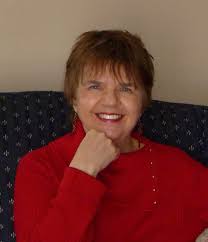
The Editing Process: Interview of a Freelance Editor
Are you thinking of using a freelance editor to go through your novel manuscript before sending it off to an agent or publisher or publishing it yourself? Smart move! I asked our regular guest blogger, Jodie Renner, who is a freelance fiction editor, to give us some ideas of what to expect when seeking out and working with a freelance editor.
MP: How do writers go about finding a freelance editor?
JR: They can just Google words like editing, fiction editor, editing services, freelance editor, copyediting, copy editor, copyediting services. Or go to the websites of editors’ associations like The Editorial Freelancers Association, http://www.the-efa.org/about.php or the Editors’ Association of Canada, http://www.editors.ca/ .
MP: How do I choose from several possible freelance editors for my novel?
JR: First, be sure they not only edit fiction, but also read and edit your genre. Visit their websites and check out their credentials and experience, and read about their process and editorial services offered. Ask the editors for references from former or current clients or check the testimonials on their website and consider contacting some of the authors who have written reviews there.
Also, it’s important to get a sample edit from several different editors. Many editors offer a 5- or 10-page free sample edit, or will edit several pages or your first chapter for a small fee. I would get at least 5 pages of your work edited as a sample. Be sure to send them all the same chapter— and your original, not one another editor has already gone through! This way you can see how each editor would handle your work. Also, if your spelling and grammar skills are a little rusty, get that aspect of the sample edit checked over by someone you know who’s good at that.
MP: What would you like potential clients include in an initial email to you?
JR: I often get this kind of email: “What are your rates for editing an 80,000-word manuscript?” There’s no way I can answer that without seeing at least 10 pages of the writing. In fact, before I can give potential clients a fee rate for their manuscript, I ask them to email me the genre, total (or projected) word count, a brief synopsis, a brief description of each of the main characters, the first 20 pages of the novel (double-spaced), and another 10 pages from somewhere in the middle. If the manuscript looks ready for copyediting and I have time to work on it soon, I do a free sample edit of the first 10 pages and send that back to the author, along with any other advice that may occur to me as I’m reading.
MP: What can writers expect from an editor and an editing process?
JR: Most freelance editors these days edit on-screen and online, using Microsoft Word Track Changes, so all of their changes are visible in red (or another color), and they add comments, suggestions and questions in boxes in the margin. You can accept or reject their changes and respond to the comments with another one of your own. At the end, you turn off the Track Changes function and delete the comments, and that becomes your final version – you don’t cut and paste it to another document, which could create new problems. Documents/Files are sent back and forth by email, as attachments.
But good editors will first assess the level of editing the manuscript needs to bring it up to current industry standards, which is almost always more than the writer realizes. Some manuscripts even need a major overhaul, starting with developmental editing; others need fairly heavy content editing for “big-picture” issues; others need stylistic help to smooth out the writing and make it clearer and more powerful; and some just need a final polish, to check for typos, grammatical error, and punctuation.
Often aspiring authors will contact me asking for a light final copyedit or proofread, when their manuscript really needs much more than that. It may be lacking in so many important ways that I can’t in good conscience take their money to just proofread it for grammar and spelling. In that case, I usually give the potential client some free recommendations of good books to read on the craft of fiction, as well as links to my articles on specific topics, such as opening, point of view, characterization, dialogue, scene structure, showing instead of telling, etc.
MP: What are the different levels of editing a novel manuscript could go through with freelance editing?
JR: These lines are fuzzy and vary within editing associations, and each editor has her/his own take on them, but here’s a general description of the various levels of freelance fiction editing in the order that they are carried out, from most extensive and expensive to final polishing touches. These levels are often carried out by different people. Developmental editors rarely do copyediting or final proofreading, and vice-versa.
1. Developmental Editing or a Manuscript Evaluation / Critique / Analysis
Developmental editors look at the big picture and the whole structure of your novel, including whether chapters and scenes should be moved, condensed, or even deleted. A developmental edit or critique / analysis will give general advice on premise, plot, structure, point of view, characterization, character arc, pacing, style, etc., as well as specific fiction techniques such as showing rather than telling, avoiding head-hopping and info dumps, etc.
Some editors like me offer an “initial critique” of the first 10, 20 or 30 pages, which is much easier on the wallet than an evaluation of the whole book, and will catch most weaknesses, such as problems with your opening, point of view, characterization, and dialogue, or recurring style issues.
2. Heavy Copyediting or Stylistic Editing
For fiction, this should include “big-picture” advice on the opening, point of view, characterization, plot holes, dialogue, pacing, and fiction techniques like showing instead of telling, avoiding “info dumps” and style gaffes, etc. May also offer suggestions to improve paragraphing, sentences, and words; cut down on wordiness; smooth awkward phrasing and transitions; comment on discrepancies and inconsistencies; and help with tone and mood—all while striving to keep the author's voice.
3. Medium Copyediting or Line Editing
Generally making the manuscript more readable. A line edit looks at the sentence structure, word choices, continuity and consistency. Often fixes awkward phrasing, smooths out rough or unclear writing, and decreases wordiness to make the writing tighter and more powerful.
4. Light Copyediting / Proofreading
For freelance editing, refers to final editing for grammar, spelling, punctuation, capitalization, and other mechanics of style. Puts the final polish on a very well-written story or a manuscript for which all issues have already been addressed and solved.
MP: Editors seem to have different fee structures and methods of charging for their services. What are some ways we can expect?
JR: Many freelance editors charge by the page, which normally means double-spaced, 12-point, so about 250 words per page. Others charge by the hour. I charge by the word, as to me, a page can end after a paragraph, or have graphics that don’t need to be edited, etc. Be sure to ask whether their rate includes a final proofreading, or whether that’s a separate process with an additional fee.
JR: Rates for editing usually depend on the amount of time and work a manuscript needs, which can vary hugely. No reputable editor will give you a blanket rate for editing 80,000 words, for example, or 300 pages or whatever, without asking to see at least a chapter or two of the manuscript first. Some manuscripts can easily take ten times the amount of work as others, in order to bring them up to current industry standards. Experienced editors know this, so they won’t give you a set rate, sight-unseen. Rates also vary depending on the experience of the editor / copy editor / proofreader. Just as in any kind of services, be wary of rates that are too low.
Generally, a final proofread or light copyedit is much cheaper than content editing, but there’s no point in paying for a final proofread if your manuscript needs bigger issues solved first, before it gets to that stage.
Authors and aspiring authors – Do you have any other questions about the freelance editing process that you’d like clarified? Please ask them in the comments below and Jodie will attempt to answer them all. Also, see Jodie’s interview of another freelance editor, Robb Grindstaff, on Jodie’s blog at http://jodierennerediting.
Thursday, May 17, 2012
THE REVIEW DILEMMA
The Review Dilemma
By Donna Galanti
It’s a funny thing once your book is published. People you don’t know are reading it and reviewing it. Some reviews will be good. Some will be conflicting. Some may be bad. Here’s my take on what new writers should do with reviews.
You may wonder how two people can find such differences in your book. Easy. It’s all subjective and your readers will vary. Just as your book is unique, so is everyone’s opinion of it based on their collective life experiences. In the same week a reviewer for my book noted “absolutely no grammar errors were noticed which proves that good editing is out there!” and another noted “Good plot, but a lot of typos.” Recommendation? Laugh over them and then ignore them.
Bad Review
Unfortunately, you may receive them. Are bad reviews all bad? Not necessarily. If people are talking about your book passionately, it's more likely to reach some readers who'll like it but would never have found it otherwise. A bad mention can be better than no mention at all, particularly for those readers who are skeptical of too many glowing reviews. It can lend more credibility to the book. What not to do about a bad review? Respond. All authors receive them. Even the NY Times bestselling authors. Why a bad review? The reader might not normally read your genre, or was misled by the cover. The writing style might not be one they normally connect with. Have you read a book and wondered how people could praise it? A bad review can even lead to self-awareness of your writing and improvement. And remember, they are reviewing books – not the writer.
Finding Best Fit Reviewers
Can you increase your chances of finding positive reviewers? Yes. Research book review bloggers in your genre. Review their website and see what kind of books they have reviewed in the past. See if your book falls within the guidelines of what they want to read. Places to find book reviewers? Use Google Alerts. Type in key words like "romance stories" or "action novels" and then in what medium you want them to appear (as they appear in blogs, the news, etc.). Google will then send you a list every day of all the hits according to your search specifications. Click on the links recommended. If the blogger looks like he offers reviews, send him a request for review.
Book Blogger Directory is resourceful: http://bookbloggerdirectory.wordpress.com/
Two forums I have found success with are Book Blogs http://bookblogs.ning.com/
And Kindle Boards http://www.kindleboards.com/index.php/topic,20049.0.html
Also, search Facebook book groups. They can have corresponding blogs that offer book reviews. Lastly, doing a GoodReads giveaway can generate positive reviews. Readers who read your genre can enter to win a copy of your book if it peaks their interest. I always send a handwritten thank you note with the book, my business card, and politely ask that they write a review if they enjoy it. Best of luck with your reviews!
Donna Galanti is the author of the paranormal suspense novel A Human Element (Echelon Press). Donna has a B.A. in English and a background in marketing. She is a member of International Thriller Writers, The Greater Lehigh Valley Writers Group, and Pennwriters. She lives with her family in an old farmhouse in PA with lots of nooks, fireplaces, and stinkbugs. Connect with Donna here:
Twitter: https://twitter.com/#!/DonnaGalanti
Thursday, May 10, 2012
HOW TO ROCK A BOOK CONVENTION
CAN'T I JUST CHASE TERRORISTS WITH THERMONUCLEAR PLAUGE?
James R. Tuck
There are literally millions of words written about how to write a novel and get published.
But what do you do after that?
In today's market there's a huge push for you to get readers to notice your book. You have to get up, get out, and get some for your book. You have to Make-It-Work. You have to make your book stick in the minds of readers and make sure they seek it out.
And that brings me to conventions.
You go to them. You love them. You get to sit in the same room as the author that you look up to and listen to them talk. If you're brave you might even get to ask a question. Then you have an actual
conversation with one of the people who inspired you.
And it is freaking awesome.
Now you can be that for someone else.
Conventions are easier to get in than you think. Here's a secret: conventions are run by people. More importantly, conventions are run by FANS. You wrote a book? Great. Now find a convention you like and write an email. Introduce yourself, provide a link to your work, and offer to be a panelist.
Follow up in a week if you don't hear from them.
Now this is the part where you have to believe in yourself. Don't act like you're Lee Child and James Patterson wrapped in a layer of Stephen King, but don't sell yourself short either. Tell it like it is in a favorable manner.
Express to the coordinator that you're willing to work, including taking last minute panels as a replacement if they wind up in a bind. You'd be surprised how often someone drops out on a panel. This attitude landed me the biggest panel I was on at Dragoncon last year. Near 200 new fans and on stage with bestselling authors in my genre.
While at the convention, talk. DON'T GET INTIMIDATED AND JUST SIT QUIETLY. The folks attending are there to see you, even if they don't know who you are. Sharpen your best stories and be ready to give lightning quick summary of your work and contact info.
If you meet an author you admire feel free to tell them, and then relax. Be cool. You're in the same game as them. Most authors are nice folks and they'll treat you as such.
Ask for contact information. FROM EVERYONE. You'll be shocked at what author has a contact you can use, what blogger will write the review of your work that goes viral. Believe me, networking is the key to future success.
When it's over take the information you gathered and send polite, genuine follow-up emails. Follow the people you met on their social media services. You'll forge contacts that can help you for the rest of your career.
Conventions rock. I know that's the unprofessional way to put it, but they do. Trust me.
James R. Tuck writes dark and scary stories for adults. His Deacon Chalk: Occult Bounty Hunter series has debuted to much praise from readers, reviewers, and other authors. Book one, BLOOD AND BULLETS will be available everywhere on February 7, 2012 and will be preceded by the e-novella THAT THING AT THE ZOO on January 27, 2012. His short, twisted, zombie love story "He Stopped Loving Her Today" is being considered for adaptation into film.
James is a former bouncer and has been a professional tattoo artist for over 15 years. His tattoo work has been published in national tattoo magazines and he owns Family Tradition Tattoo in Marietta, Ga. He lives near there with a wonderful wife, three wonderful children, and six dogs of varying degrees of wonderfulness. To learn more about James and BLOOD AND BULLETS visit www.jamesrtuck.com
Thursday, May 3, 2012
May 2012 Debut Book Releases
Chuck Greaves HUSH MONEY (St. Martin's Minotaur) May 2012
Julia Heaberlin PLAYING DEAD
Jeremy Bates WHITE LIES
Daniel Friedman DON’T EVER GET OLD
*note. this post disappeared for some odd reason. I will upload the book synopsis for these titles by the weekend